
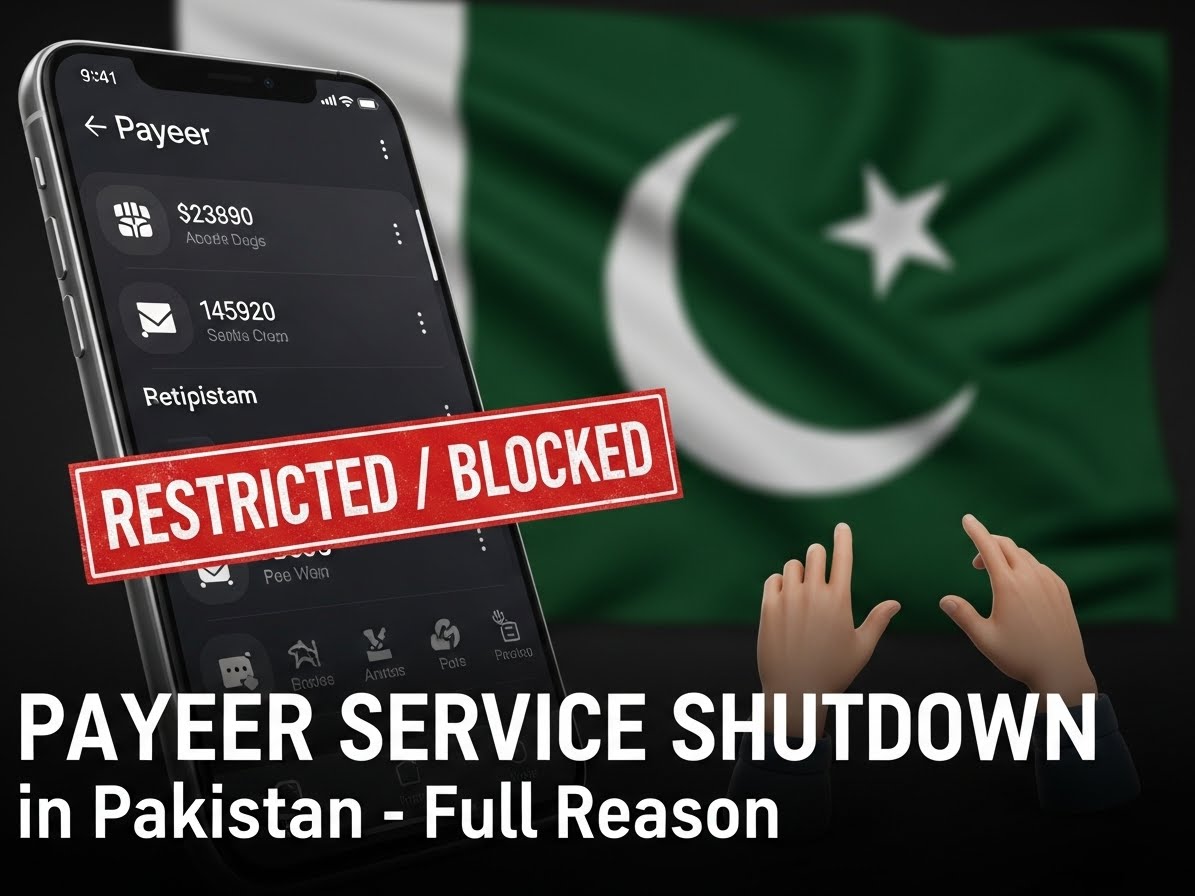
Payeer has been one of the most widely used online payment platforms among Pakistani freelancers, digital marketers, and crypto users. However, millions of users have recently faced withdrawal failures, account restrictions, and complete service shutdowns. This article explains why Payeer is no longer working in Pakistan, what caused the global restrictions, and what Pakistani users can do now. If you are a Payeer user in Pakistan, this complete guide will help you understand the situation clearly and find safe alternatives.
What Happened to Payeer in 2025?
In October 2025, the Council of the European Union introduced a new sanctions package targeting several Russian-linked crypto services, including the well-known payment provider Payeer. These sanctions were a direct response to Russia’s actions in Ukraine, as stated by the EU. The restrictions officially take effect on November 25, 2025, and they impact Payeer globally, including Pakistan.
Because Payeer has been connected to Russian financial networks, EU authorities have banned their operations for European users. This means all global companies, financial institutions, online exchanges, and service providers that comply with international regulations can no longer interact with Payeer. As a result, many countries, including Pakistan , are now facing the shutdown of Payeer-related services.
Why Payeer Is No Longer Working in Pakistan
The main reason Payeer stopped working in Pakistan is linked to international restrictions. While Pakistan itself has not banned Payeer, Pakistani users rely on global payment processors, exchanges, and financial tools that must follow EU and US compliance laws.
1. EU Sanctions on Payeer
The EU concluded that Payeer was providing services to Russian platforms, including entities previously accused of violating sanctions. This included:
-
Allowing transactions in Russian rubles
-
Processing payments linked to Russian banks
-
Providing crypto wallet and transaction services to Russian users
-
Collaborating with RuStore, a Russian government-backed app store
These activities led the EU to classify Payeer as a high-risk financial platform, resulting in a complete ban on its services within Europe.
2. Global Companies Blocking Payeer
Once the sanctions were announced, major financial partners and international platforms immediately restricted Payeer. These partners included:
-
Payment gateways
-
Crypto exchanges
-
Liquidity providers
-
Banks
-
Compliance-driven fintech companies
Since these partners operate globally, they were legally required to block Payeer worldwide — including in Pakistan.
3. High Risk of Frozen Accounts
Because Payeer is now a sanctioned entity, any platform that continues dealing with it may have its own accounts frozen. This has forced Pakistani service providers to stop accepting Payeer deposits or withdrawals to avoid legal consequences.
4. Payeer’s Own Announcement
Payeer officially announced:
-
Services for EU and Russian users are discontinued
-
Withdrawals remain open temporarily
-
Platform operations will not continue normally after November 24, 2025
Although Pakistan was not directly mentioned, the global restrictions automatically affect all Pakistani users.
How This Shutdown Affects Pakistani Users
Pakistani users commonly used Payeer for:
-
Freelancing payments
-
International transactions
-
Online business earnings
-
Pakistan-to-Pakistan transfers via social platforms
But now, the following problems are occurring:
-
Payeer withdrawals are failing
-
Money cannot be transferred to local exchanges
-
Some accounts may not process new transactions
-
Pakistani service providers have disabled Payeer gateways
-
Balances may require urgent withdrawal before final deadlines
The financial uncertainty makes Payeer unsafe for long-term usage, especially for Pakistani users who rely on consistent payment routes.
What Should Pakistani Users Do Now?
While Payeer services are shutting down, Pakistani users still have several safe alternatives to receive international payments and manage online earnings.
1. Withdraw Funds Before Deadlines
If you still have money in Payeer, withdraw it immediately using any available method:
-
Bank transfer (if working)
-
Exchange-to-exchange transfer
Do not delay, because compliance restrictions may tighten further.
2. Switch to Safer Alternatives
Here are popular Payeer alternatives in Pakistan:
Skrill
-
Widely used in Pakistan
-
Supports bank withdrawals
-
Reliable for freelancing payments
Wise
-
Works internationally
-
Low fees
-
Transparent exchange rates
Binance / OKX Crypto Exchange
-
For users comfortable with digital assets
-
Fast and easy withdrawals through P2P
JazzCash / Easypaisa (through supported gateways)
-
Local options for indirect transfers
Switching early can prevent financial disruptions.
3. Avoid Using Blocked Services
Do not use any service that still claims to support Payeer withdrawals. These platforms may:
-
Lose access
-
Have frozen funds
-
Risk user balances
Always use verified and compliant payment routes.
Is Payeer Coming Back to Pakistan?
Based on the current sanctions, it is unlikely that Payeer will return anytime soon. Since the restrictions are tied to international politics and financial compliance, reversing them will take time — if it happens at all.
Even if Payeer operates somewhere unofficially, regulated partners will still refuse to deal with them. This means Payeer cannot operate smoothly in Pakistan until the sanctions are lifted.
Frequently Asked Questions (FAQ)
1. Is Payeer banned in Pakistan?
No. Payeer is not banned by Pakistan. It stopped working because of global sanctions that forced platforms to disable Payeer worldwide.
2. Can Pakistani users still withdraw their funds?
Yes, but only for a limited time. Withdraw your balance as soon as possible.
3. Are Payeer alternatives safe in Pakistan?
Yes. Platforms like Skrill, Wise, Binance, and local banking options are currently safe and widely used.
4. Will Payeer work again after sanctions?
There is no official timeline. As long as sanctions remain, Payeer services will stay restricted.
Final Thoughts
The shutdown of Payeer is a major setback for Pakistani freelancers, crypto users, and digital businesses. However, the reason is global sanctions , not a Pakistan-specific issue. Understanding why Payeer is no longer working in Pakistan helps users make informed decisions and shift to secure alternatives.
To avoid financial loss or blocked payments, Pakistani users should:
-
Withdraw funds quickly
-
Move to reliable payment systems
-
Stay updated on compliance changes
By switching early, users can continue receiving international payments without interruption.