

Blog
How Technology is Transforming Student Learning Outcomes

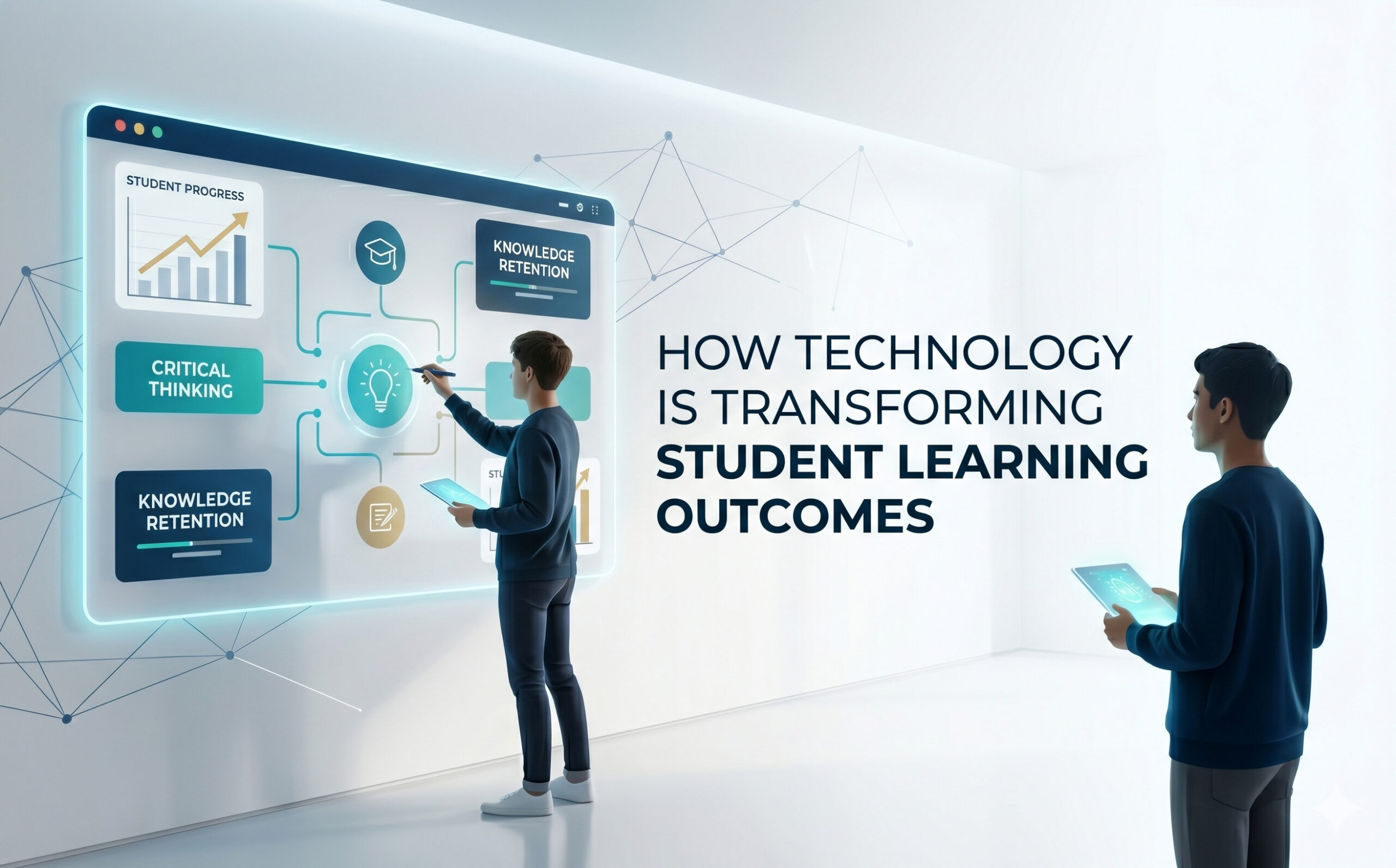
In today’s rapidly evolving world, how technology is transforming student learning outcomes is one of the most discussed topics in modern education. Technology has improved nearly every sector of our lives, and education is no exception. It has become easier for students to learn as a result of technology being introduced to classrooms and institutions worldwide. There are many innovative ways for teachers to teach now, and they can connect with students more easily and quickly than ever before. Classrooms have become more inclusive, and teaching has become a more manageable profession with significantly reduced workloads.
If you want to know the role of technology in the education sector and have thoughts about how technology is transforming student learning outcomes, then you are at the right place. In this article, we will take a glance at the various ways through which technology has changed and continues to change the future of education.
How Technology is Transforming Student Learning Outcomes
Various education technologies are reshaping the way students learn and teachers teach. Some of the key ways through which technology is transforming student learning outcomes include the following approaches.
Multimedia in Education
In the world of technology, multimedia plays a central role in transforming student learning outcomes. By using audio, video, and other multimedia features, teachers are now able to teach students more effectively than ever before.
Multimedia is a product of technology and a gift for the education sector, helping both teachers and students teach and learn in easy, effective ways. Instead of writing on a board, teachers can now use PowerPoint presentations and interactive media to deliver lessons. Technology innovations like multimedia are making the future of education more engaging and accessible for all learners. For more on multimedia in education, visit Stanford’s report on technology in education.
E-Study Materials Transforming Student Access
We all know that in the early days of education, the only sources of gaining knowledge were teachers and physical books. Studying extra was limited to the library or collecting books from various places. Today, however, having access to internet-based study materials has completely changed things for students.
Students now have access to educational resources online by simply sitting in one location. They do not need to search for study materials in the library. They have anywhere, anytime access to knowledge. This has provided students with an abundance of options to select from based on their comfort and learning pace. By studying online with e-learning material, students are motivated to self-learn and gain self-confidence, which directly reflects in how technology is transforming student learning outcomes.
Artificial Intelligence in Education
With the introduction of Artificial Intelligence in education, the sector has improved to a greater extent. AI has proved to be a helpful tool for teachers by replacing tedious manual processes. The computerized grading system for multiple-choice questions, for example, has taken over time-consuming manual grading. In addition, AI recommends that students focus on and improve their areas of weakness. You can learn more about AI’s role in teaching from the U.S. Department of Education’s AI and Teaching Report.
AI will relieve teachers of the task of designing individual lesson plans for each student. Using the methods of instruction that are most effective for them, students will be free to learn at their own speed. Since students perform far better when they have some say in what they want to accomplish, AI may even allow them to create their own educational goals. This is a major reason why technology is transforming student learning outcomes so significantly today.
Virtual Reality Transforming Student Learning
As a component of modern technology, Virtual Reality (VR) has a significant impact on education. In this digital world, approximately 65% of the population are visual learners, making immersive technologies especially powerful. By 2026, the global XR in education market is projected to grow at over 30% CAGR, and AI adoption in learning is becoming standard in schools, colleges, and corporate training.
Virtual reality is one of the most exciting advances in technology that is significantly changing education. It allows students to experience immersive environments, from virtual science labs to historical events, making abstract concepts much easier to understand. This is yet another clear example of how technology is transforming student learning outcomes in real and measurable ways.
Instant Availability of Information
With advanced technology, it is now easy for learners to have quick and on-time access to the information they need. As a learner, you are just a click away from accessing a vast ocean of knowledge and information. There are many platforms available over the Internet to search and study any kind of information you want, at any hour of the day.
Additional Digital Tools for Quality Education
Another way technology is transforming student learning outcomes is by providing additional digital tools to help teachers and students achieve quality education. You can use various tools to improve written content, research notes, and academic papers. As a student or researcher, you can benefit from these tools to improve the quality of your thesis or research writing significantly.
Digital Grading System in Modern Education
Among the ways that technology is transforming student learning outcomes, the digital grading system holds an important place. A manual grading system can impact the transparency of a student’s assessment. It is also time-consuming and drains the teacher’s effort, time, and energy.
Through the digital grading system, education assessment is constantly improving with time, which helps build trust between students and teachers. Automated, transparent grading means students receive faster feedback and teachers can focus more on actual teaching rather than administrative tasks.
Conclusion
Technology in today’s world has become a crucial part of our society. Through various innovative means, technology is changing the future of education, which is a positive sign for society as a whole. Because of advancements like AI, VR, multimedia, and digital grading, the education sector is experiencing a massive transformation. The ways discussed above are the main reasons and examples of how technology is transforming student learning outcomes for the better.


